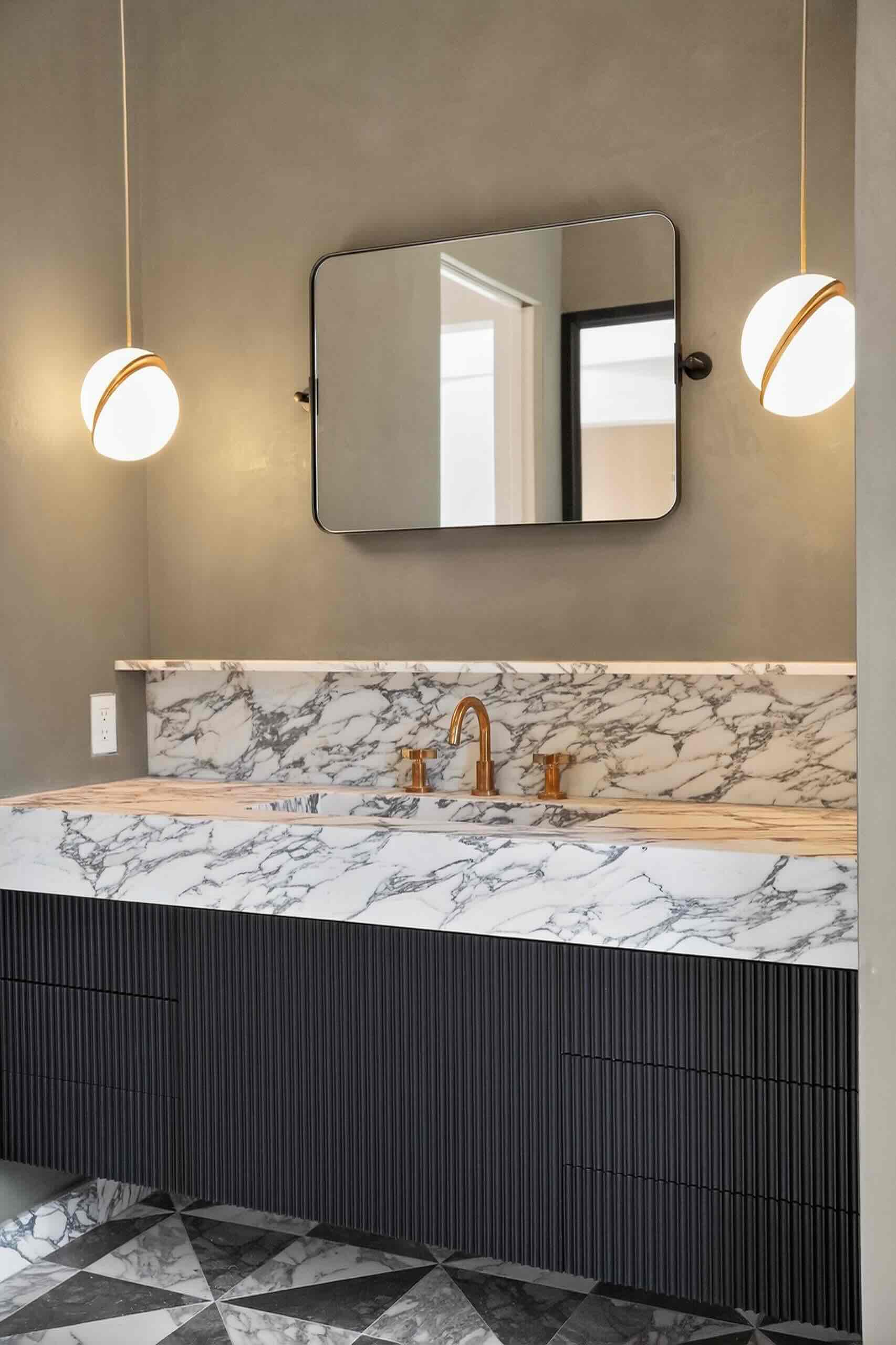
Every home tells a different renovation story. When you look at real estate in Wellesley, "average" is a metric that rarely applies. Whether you are eyeing a classic Colonial in the Cliff Estates or a shingle-style estate in Wellesley Farms, the market here operates in a tier of its own.
In 2026, the median home price in Wellesley is hovering just above $2 million, with premium neighborhoods often commanding upwards of $750 per square foot. For many homeowners, this creates a pivotal question: Does it make sense to move, or should we invest in a whole-home renovation?
In towns like Wellesley, renovation decisions are as much financial as they are personal.
If you have tried researching renovation costs online, you have likely hit a wall of vague estimates. National websites will tell you a "luxury" renovation costs $150,000. In Wellesley, that might cover your kitchen cabinetry and appliances, but certainly not a whole-home transformation.
Most homeowners we speak with in Wellesley start their research expecting national averages to apply, then quickly realize local costs operate on a very different scale.
At GC Builders, we believe in radical transparency. In this guide, we are pulling back the curtain on the real 2026 construction costs for the MetroWest luxury market. We will move beyond the guesswork and give you actionable data on what it actually costs to build, renovate, and restore homes in Wellesley today.
If you are looking for a quick baseline to anchor your budget, the table below reflects current market realities for high-end residential projects in the Greater Boston area. These ranges reflect real bids we see today, not marketing averages or outdated online calculators.
Note: These figures represent construction costs only. They do not include architectural fees, permitting, or interior design furnishings.
Think of this table as a budgeting compass, not a final price.
To understand where your budget goes, it helps to view your project not just as a construction site, but as a collection of specialized tiers.
1. The "Cosmetic Refresh" ($200k – $350k Total)
For a standard 2,500–3,000 sq. ft. home, this budget allows you to modernize the aesthetic without opening up walls.
- Best for: Homes built after 1990 that have "good bones" but dated finishes (e.g., golden oak floors, cherry cabinets). This tier works best when the home’s systems have already been updated within the last 20–25 years.
- What you get: High-end painting, refinished flooring, updated lighting plans, and perhaps a "pull-and-replace" kitchen update where the layout remains the same but the cabinets and appliances are upgraded to Sub-Zero/Wolf tier.
- The Trap: At this level, the biggest risk is assuming cosmetic work will stay cosmetic once demolition begins. In older Wellesley homes (pre-1950), a cosmetic refresh often uncovers deeper issues. You cannot simply patch drywall if the plaster behind it is crumbling, and you cannot install a steam shower if the plumbing stack is cast iron from 1930.
2. The "Full Gut Renovation" ($600k – $1.2M+)
This is the most common tier for new homeowners in neighborhoods like Poets’ Corner or the Country Club area.
- The Scope: We strip the house to its studs. This is critical for energy efficiency—bringing a 1920s home up to MassSave standards with spray foam insulation and modern HVAC systems. Energy efficiency upgrades alone often justify a studs-out approach in older homes. And you may also find our article on Boston’s New Energy Laws for homes interesting.
- Structural Work: This tier often includes removing walls to create the open-concept kitchen/family room flow that modern families demand.
- Kitchen & Bath: Expect to allocate $120,000+ for the kitchen alone. In 2026, luxury kitchens in Wellesley are seeing a rise in "working pantries" (sculleries), secondary prep kitchens that keep the main entertaining space pristine.
For many buyers new to Wellesley, this tier feels expensive until they compare it to the cost of purchasing a fully updated home outright.
3. The "Structural & Luxury Transformation" ($1.5M – $3M+)
Projects at this level succeed or fail based on early planning, not finish selections. This is where you build your "forever home." At this level, you are likely engaging in significant architectural changes—additions, digging out basements to increase ceiling height, or relocating staircases. This is where craftsmanship becomes visible in everyday use, not just in photos.
- Exterior: The budget here allows for slate or copper roofing, copper gutters, and custom mahogany windows—details that the Wellesley Historic District Commission may require if you are in a sensitive area.
- Smart Tech: Full Lutron lighting systems, geopolitical climate control, and integrated security.
- Custom Millwork: This is a major differentiator. We are talking about paneled libraries, coffered ceilings, and custom built-ins that look like they have been there for a century.
Renovating in Wellesley is not the same as renovating in a rural town. There are specific regulatory and logistical factors that influence your bottom line.
1. The Large House Review (TLAG)
Wellesley has strict zoning bylaws designed to prevent "mansionization." The town calculates the Total Living Area plus Garage (TLAG).
- The Trigger: In many districts (like SR10 or SR15), if your renovation or addition pushes your home over a certain square footage threshold (commonly 3,600 sq. ft. for smaller lots), it triggers a Large House Review. This review surprises many homeowners because it is based on math, not appearance.
- The Cost: This review process requires detailed site plans, topographical surveys, and often multiple hearings with the Planning Board. You should budget an additional $10,000 – $15,000 in professional services (civil engineering, legal, architecture) just to navigate this approval process.
2. Building Permit Fees
Permit fees in Wellesley are significant revenue generators for the town. As of the 2026 fee schedules, you should anticipate permit fees costing approximately $12 to $15 per $1,000 of construction cost.
- Real World Math: On a $1.5 million renovation, your building permit fee alone could be $18,000 to $22,500. This is a "hard cost" that must be paid upfront before a single hammer is swung.
Permit fees are often overlooked because they do not improve the home visually, yet they must be paid before construction begins.
3. Historic District Commission
If your home falls within a Single Building Historic District or a Neighborhood Conservation District, your exterior renovations (windows, siding, roofing) are subject to review.
- Material Impact: You may be required to use authentic wood clapboard instead of Hardie plank, or true divided-light wood windows instead of vinyl. These material mandates can increase your exterior budget by 30–50% compared to standard materials.
Approval timelines should be planned before materials are ordered.
One of the most common mistakes homeowners make is allocating 100% of their budget to construction. In a luxury project, "soft costs" (fees paid to consultants) are substantial; skipping them almost always leads to higher construction overruns later.
- Architecture & Design: For a full-service design-build or architect-led project, expect to pay 10% to 15% of construction costs. For a $1M project, that is $100k–$150k. This ensures detailed drawing sets that minimize expensive change orders later.
- Engineering: Structural engineers are non-negotiable for removing load-bearing walls. A typical structural analysis and beam design can run $3,000 – $8,000.
- The "Old Home" Contingency: If your home was built before 1970, we strictly advise carrying a 15% – 20% contingency fund. This protects you against the "unknowns": lead paint abatement, knob-and-tube wiring, or rotted sills hidden behind old siding.
We often get asked, "Will I get this money back?"
In Wellesley, the answer is nuanced. According to the 2026 Cost vs. Value data for the New England region:
- Exterior Appeal: Projects like stone veneer or steel entry door replacements often recoup over 200% of their cost because they drive curb appeal.
- Interior Luxury: A major upscale kitchen remodel typically recoups 35% – 50% of its cost in immediate resale value.
However, the math changes when you view it through a luxury lens.
If you buy a $2M home in Wellesley and spend $1M renovating it, you now own a $3M home in a market where $3M sales are common. Unlike many other suburbs, Wellesley’s high price ceiling protects your investment. You are less likely to "over-improve" for the neighborhood here than almost anywhere else in Massachusetts.
More importantly, the ROI of a luxury remodel is often measured in lifestyle. It is the value of a mudroom that actually organizes your family’s chaos, a kitchen that hosts holidays effortlessly, and a primary suite that serves as a daily retreat. In Wellesley, lifestyle upgrades often hold value longer than trend-driven finishes.
Luxury takes time. In the current market, here is a realistic timeline for a whole-home remodel in Wellesley:
- Design & Feasibility (2–4 Months): As-built measurements, architectural design, and initial budget pricing.
- Permitting & Approvals (1–3 Months): This can extend if you require Large House Review or Historic Commission approval.
- Construction (9–14 Months): A gut renovation of a 4,000 sq. ft. home is rarely a 6-month job. It requires sequencing: demolition, framing, rough MEPs (mechanical, electrical, plumbing), insulation, plaster, millwork, and finishes.
Timelines stretch most often during approvals, not construction.
Pro Tip: Rushing the early phases usually adds months later. The best time to hire a builder is during the design phase. By bringing us in early, we can value-engineer the plans before they are finalized, ensuring your architect’s vision aligns with your actual budget.
A whole-home renovation is likely one of the largest financial commitments you will make. It requires a partner who understands not just the hammer-and-nails aspect of construction, but the specific financial, zoning, and aesthetic landscape of Wellesley.
At GC Builders, we specialize in guiding clients through this exact terrain. We don't just build houses; we build clarity, trust, and homes that stand the test of time.
Curious where your project falls in these ranges?
Don't rely on guesses. Let’s look at the real numbers together.
Clear expectations are the foundation of a successful renovation. A feasibility consultation answers the ‘should we renovate or move’ question before emotions drive the decision.
[Schedule a Feasibility Consultation]
We will walk your property, review your goals, and give you a realistic budget assessment, not a guesstimate.
What is the difference between a "Gut Renovation" and a "Remodel"?
A remodel typically involves changing the appearance or function of a room (like a new kitchen) without altering the structure. A gut renovation involves stripping the interior down to the framing (studs). This allows for the replacement of all mechanical systems (plumbing, electrical, HVAC), insulation, and subflooring. In older Wellesley homes, a gut renovation is often necessary to remove hazardous materials like lead or knob-and-tube wiring and to achieve modern energy efficiency standards.
Does a renovation in Wellesley always trigger a "Large House Review"?
No, but it is common for significant additions. The Large House Review (LHR) is triggered when the Total Living Area plus Garage (TLAG) exceeds the threshold for your specific zoning district (often 3,600 sq. ft. in single-residence districts). It can also be triggered if you are increasing the TLAG by more than 10% on a home that is already over the threshold. We can calculate your preliminary TLAG during our initial consultation to see if this applies to you.
What are the current permit fees in Wellesley?
As of 2026, building permit fees in Wellesley are roughly $12 to $15 per $1,000 of construction value. For a $1 million project, you should budget approximately $15,000 for the building permit alone. There may be additional fees for plumbing, electrical, and sheet metal permits.
How long does the design and permitting process in Wellesley take?
You should plan for 3 to 6 months before construction starts. This includes time for architectural design, structural engineering, contractor bidding/pricing, and town approvals. If your project requires a Special Permit, Large House Review, or Historic Commission approval, this timeline can extend further.
What is the "working pantry" trend I keep hearing about?
Also known as a "scullery" or "messy kitchen," this is a secondary room adjacent to the main kitchen. It houses small appliances (toaster, coffee machine), a second dishwasher, and prep sink. It allows you to keep your main open-concept kitchen clean and clutter-free while entertaining. This is a highly requested feature in Wellesley luxury renovations.
How does a renovation impact my property taxes?
A significant renovation that increases the value of your home will likely lead to an increased tax assessment. The Town of Wellesley Assessors Office will review the building permit data and may conduct a site visit upon completion. While your taxes will go up, this is a direct reflection of the increased equity and market value of your property. Tax increases tend to reflect value already recognized by the market.
Why are construction costs higher in Wellesley than in other parts of the country?
The "Boston Premium" is real. We have some of the highest labor rates in the country for skilled trades (plumbers, electricians, carpenters). Additionally, the cost of doing business here—insurance, licensing, and strict code compliance (like the specialized stretch energy codes)—drives up overhead. Finally, logistics in established towns like Wellesley (narrow streets, police details for deliveries) add operational costs that don't exist in new-development suburbs.