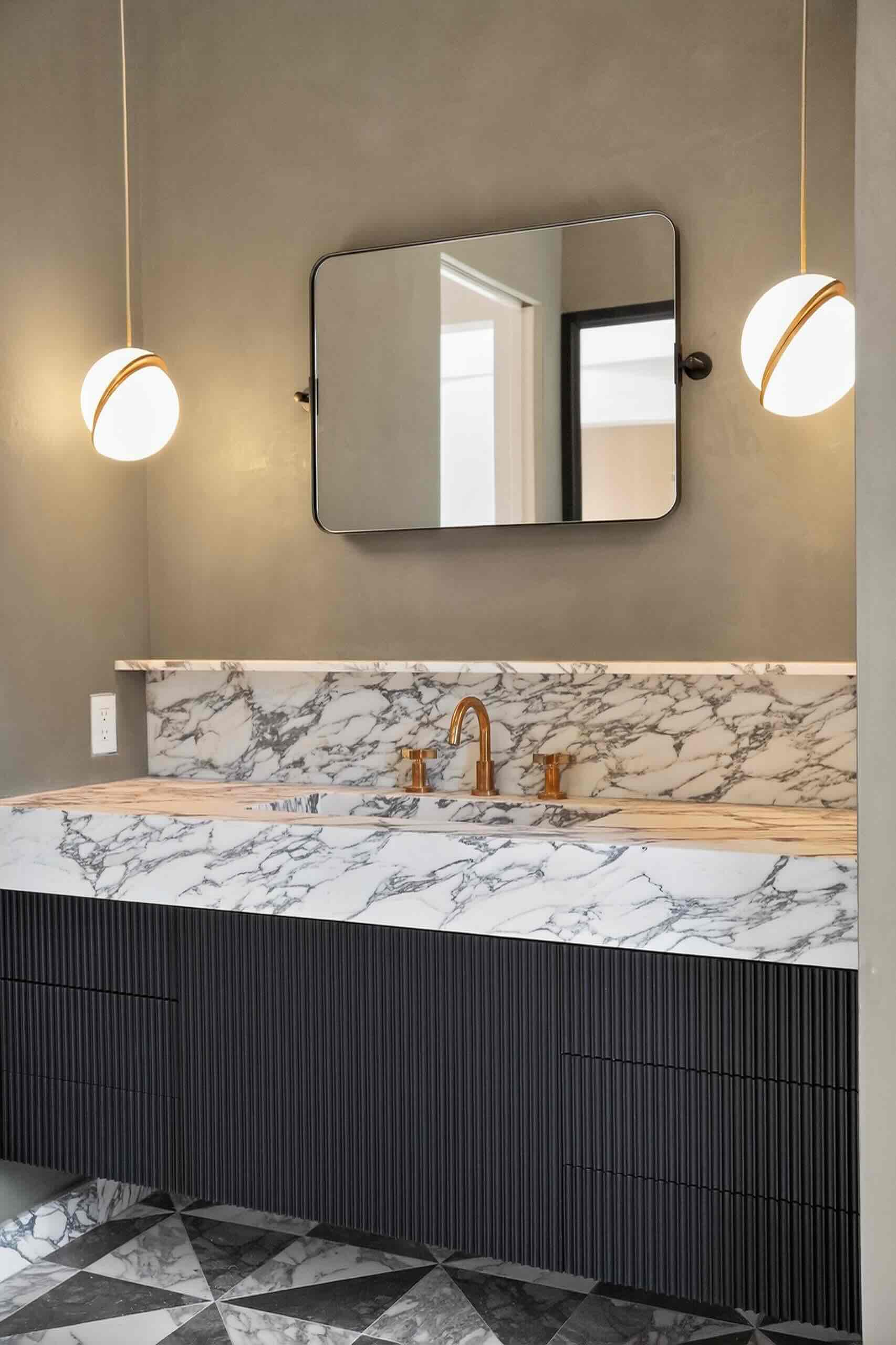
Sourcing exotic stone & wood for custom Massachusetts kitchens means selecting rare natural materials, such as quartzite, marble, soapstone, walnut, teak, and wenge, from trusted stone yards, direct importers, and certified wood suppliers. The process covers slab selection, vein matching, finish selection, and working with an experienced general contractor who manages everything from material sourcing to final installation.
If you are planning a luxury kitchen in the Greater Boston area, the materials you choose will define the space more than any other decision you make. Today's homeowners in Weston, Wellesley, Newton, and Brookline are choosing rare quartzite slabs, hand-rubbed walnut cabinetry, and moisture-resistant teak that turn a kitchen into a personal statement. This guide covers everything you need to know about Sourcing Exotic Stone & Wood for Custom Massachusetts Kitchens, from the best material options and their costs to how GC Builders manages every step of the process on your behalf.
Walk into a truly custom kitchen in Weston or Wellesley, and something stops you before you even notice the appliances. It is usually the stone. A sweeping slab of quartzite across the island, veins that no other slab on earth repeats exactly, paired with cabinetry in a wood species you have never seen in a showroom. That combination does not happen by accident.
Most homeowners come into a kitchen build thinking about layout first, finishes second. The builders who have done this long enough know it is actually the other way around. Your material selections drive lead times, budget allocations, fabrication decisions, and even structural considerations. Get them locked in early, and everything downstream runs smoother.
There are three practical reasons to treat sourcing as the first priority, not a late-stage decision:
- Rare materials have real lead times. A slab of Azul Macaubas or a matched set of Cristallo Quartzite panels does not sit waiting on a shelf in Boston. Some of the most sought-after stones and certified exotic wood species take six to sixteen weeks from reservation to delivery. Your design home construction schedule depends on this.
- Not everything performs in a New England climate. Massachusetts humidity in July and the dry cold of January are hard on poorly chosen materials. Certain wood species warp. Certain stone finishes show every water spot. The right sourcing process screens for climate compatibility before a single slab gets reserved.
- Rarity holds value. A slab of Cristallo Quartzite with its translucent gold and rust veining cannot be recreated in any other kitchen in the world. That is not a marketing phrase. It is a property of natural stone. When a buyer in Brookline or Newton walks into your kitchen and sees something they have never seen before, that recognition shows up in the price.
Natural stone sets the visual foundation of any high-end kitchen. Your countertops, island surface, and backsplash do more work than any other finish in the room. Here is what the luxury market in Greater Boston is actually specifying right now.
Quartzite: Beauty That Actually Holds Up
Ask any experienced builder working in Weston or Wellesley what their clients want when they say "marble look, marble feel, but I have kids," and the answer is always quartzite. It forms when sandstone is compressed under extraordinary heat and pressure, and the result is a 100% natural stone that scores around 7 to 8 on the Mohs hardness scale, making it significantly tougher than marble and more resistant to acid etching.
The varieties worth knowing for a Greater Boston luxury build include:
- Taj Mahal Quartzite: Warm cream tones with soft gold veining. It pairs beautifully with walnut cabinetry and reads as understated rather than showy, which suits a lot of Weston and Wellesley homeowners perfectly.
- Cristallo Gold Quartzite: Translucent with dramatic gold and rust veins that react to natural light throughout the day. This is the first choice for a statement waterfall island.
- Jadore Quartzite: Soft green with golden movement through the slab. Bold enough to be interesting, refined enough to be livable.
- Azul Macaubas: Vivid blue-gray with rare veining patterns. One of the most striking stones on the market and priced accordingly.
Finish options matter as much as the stone itself. A polished finish reflects light beautifully but shows every fingerprint and water ring. A honed finish is matte and softer-looking. A leathered finish has a slight texture that hides daily smudges far better than either of the other two, which is a practical consideration for a kitchen that actually gets used.
Marble: Still Worth It When Done Correctly
Marble has been the benchmark for luxury kitchens for decades, and it has not lost that status. What has changed is how experienced builders specify it. A polished white Calacatta slab looks stunning on day one and shows every etch mark by month three. Specify honed or leathered instead, and the same marble ages gracefully rather than looking beat up.
The variety you choose shapes the whole kitchen:
- Calacatta Gold brings bold gold veining against a white background. It is the most recognized luxury marble and works in almost any design direction.
- Calacatta Viola is rarer, with purple-tinged veining that makes it genuinely one-of-a-kind.
- Statuario has fine, restrained gray veining. It is the choice for homeowners who want elegance that does not compete with the rest of the room.
- Paonazzo has complex, multi-color movement in gold, gray, and burgundy. Used as an island surface, it becomes the focal point of the entire kitchen.
Marble is also a natural fit for historic home renovations in Newton and Brookline, where the material echoes the architecture of the home instead of clashing with it.
Leathered Granite: The Practical Choice Nobody Talks About Enough
Leathered granite does not get the attention it deserves in luxury kitchen discussions. The leathering process uses diamond-tipped abrasive pads to remove the polished surface and expose the stone's natural crystalline texture underneath. What you end up with is a matte, slightly tactile finish that looks nothing like the shiny granite you grew up seeing in kitchens.
It hides water spots, fingerprints, and daily smudges better than any polished surface. The texture also adds depth that photographs well and feels genuinely different underhand. For a high-traffic family kitchen in Wellesley or a busy entertaining kitchen in Newton, this is one of the most practical luxury choices available.
Blue Bahia, with its electric blue tones, makes a statement as an island surface. Uba Tuba in leathered black-green with gold flecks pairs beautifully with light cabinetry. Typhoon Bordeaux blends warm reds and cream for a result that reads as rustic and refined at the same time.
Soapstone: What Serious Cooks Actually Want
Soapstone is the choice for homeowners who use their kitchen hard. It is naturally non-porous, meaning it does not absorb stains or harbor bacteria. It resists heat without damage and handles acids from citrus, vinegar, and cleaning products without any reaction at all. You do not need to seal it on any schedule.
Over time, soapstone develops a natural patina that most homeowners come to love. If you want to deepen its color, periodic treatment with mineral oil does the job in minutes. It works especially well in farmhouse-style kitchens and in Boston home remodeling and renovation projects where the design leans toward natural, durable materials over high-maintenance show surfaces.
Stone handles the hardscape. Wood handles the warmth. The species you choose for your cabinetry, open shelving, and island surfaces sets the emotional register of the whole kitchen. These are the species worth considering for a Greater Boston luxury build.
Walnut: The Benchmark
Walnut is the most requested luxury wood in Massachusetts custom kitchens, and the reason is simple: it works with everything. Deep brown tones, grain that is interesting without being distracting, and a quality of aging that actually improves the look of your kitchen over years rather than decades. It accepts finishes exceptionally well and pairs naturally with Taj Mahal Quartzite, Calacatta Gold Marble, or leathered Uba Tuba Granite depending on which direction your overall palette runs.
Teak: Built for the New England Climate
Teak is worth serious consideration in Massachusetts specifically because of what New England weather does to wood. The natural oil content in teak makes it highly resistant to moisture, mold, and the dimensional movement that comes from swinging between July humidity and January dryness. Most exotic species fight the climate. Teak works with it.
Use it for kitchen islands, butcher block prep surfaces, or open shelving. Left unfinished, teak fades to a silver-gray over time. Maintained with periodic oiling, it keeps its warm golden color. One important note: always specify FSC-certified teak. Responsible sourcing matters both ecologically and as a standard that aligns with the sustainability goals many homeowners pursuing luxury home renovations in the Greater Boston area now prioritize.
Wenge: For Kitchens That Mean Business
Wenge is not a beginner's wood. It comes from Central and West Africa, primarily the Congo, Cameroon, and Gabon, and its deep espresso-black color with straight coarse grain makes it one of the most architecturally demanding cabinet woods available. Paired with white or cream stone countertops, the contrast is dramatic and intentional. Paired with anything else and the balance tips into competition.
The density of wenge makes it genuinely challenging to fabricate. It requires craftsmen who have worked with it before and understand how it behaves under tools and through seasonal acclimation. Do not treat it as a drop-in substitute for a darker domestic wood.
Zebrawood and Bubinga: Statement Accents
Zebrawood has a light golden base with dark brown striping that moves dramatically through the grain. It is not a wood for full cabinetry. Used on an island face, an accent panel, or open shelving against neutral perimeter cabinets, it creates the kind of visual moment that guests remember. A zebrawood island paired with a contrasting stone top is a combination that never fails to land.
Bubinga covers the opposite end of the color spectrum, ranging from reddish-orange to deep burgundy tones with exceptional hardness and durability. It is relatively uncommon in the Massachusetts market, which is exactly its appeal for homeowners who want a kitchen that genuinely has no equivalent in their neighborhood.
Reclaimed and Live Edge Wood: Materials That Carry History
Reclaimed American Chestnut, Heart Pine, and old-growth Walnut sourced from New England barns and mill buildings bring something no new material can replicate. These are woods that were cut and dried over decades or centuries, denser than anything you can buy new today, and marked by the grain patterns and mineral streaks that only real age produces.
Live edge slabs add another dimension entirely. Each one preserves the natural edge of the tree exactly as it grew. Used as a kitchen remodeling centerpiece for an island or shelving run, a live edge slab functions simultaneously as furniture-grade art and a practical work surface. No two are identical. That is the point.
Choosing great individual materials gets you halfway there. Getting the combination right is where real design judgment comes in. Here are three pairings that hold up in Massachusetts luxury kitchens across different architectural contexts:
- Taj Mahal Quartzite with Hand-Rubbed Walnut Cabinetry. Warm, cohesive, and enduring. This pairing suits the balanced elegance that Weston and Wellesley homeowners tend to come back to.
- Leathered Blue Bahia Granite Island, Painted White Perimeter Cabinets, and Teak Open Shelving. One bold surface carries the room while everything around it plays a supporting role. The teak shelving adds warmth without competing with the island.
- Honed Calacatta Gold Marble with Wenge Cabinetry. High contrast, architecturally modern, and visually arresting. This combination works especially well in Brookline and Newton townhomes where the architecture has strong lines.
The underlying principle holds across all three: when your stone is dramatic, keep the wood warm and tonal. When the wood is the statement, pull back on the stone and let it breathe.
Two fabrication techniques elevate any pairing significantly. Book-matching splits a single slab down the center, opens both halves side by side, and turns the reflected veining into a deliberate design feature rather than a visible seam.
Vein-matching runs the stone continuously from the countertop up through a full-height backsplash so the pattern never breaks. Both require precise digital slab mapping before any cuts are made.
GC Builders handles this layout work before fabrication begins, which is how the veins end up where they are supposed to rather than where chance puts them. For more on how design and construction coordinate through this process, visit the design home construction page.
Sourcing Exotic Stone & Wood for Custom Massachusetts Kitchens is not a Saturday morning errand. It is a structured process that runs alongside the full build schedule, and every step matters.
Here is how GC Builders manages it from first conversation to finished kitchen:
- Design Consultation. Before any material conversations happen, the team reviews your goals, your home's architectural character, your kitchen layout, and your budget. Material direction follows from that, not the reverse.
- Material Direction. GC Builders proposes a stone family, a wood species, a finish type, and an edge profile. You see the complete direction before any sourcing commitments are made.
- Slab Yard Visits. You visit trusted Greater Boston stone distributors to select specific slabs in person. GC Builders photographs each candidate slab and builds a digital layout mapping your chosen stone against your kitchen's exact dimensions. Photos cannot replace seeing a full slab in natural light.
- Wood Sourcing and Mill Selection. GC Builders contacts vetted wood suppliers and millwork partners. For exotic species, you review physical samples before anything is ordered, and lead times are confirmed and built into the project schedule before they become a problem.
- Material Reservation. Selected slabs and wood are reserved and held. For rare stone like Cristallo or Azul Macaubas, this step happens months in advance because availability does not wait.
- Fabrication Coordination. Stone goes to skilled fabricators for templating, cutting, edge profiling, and finishing. Wood goes to millwork craftsmen for cabinet and island construction.
- Installation. Both elements are installed within the broader kitchen build schedule, coordinated with plumbing rough-in, electrical work, and cabinetry installation so no trade conflicts with another.
- Finishing and Sealing. Stone receives appropriate sealant. Wood gets a low-VOC finish that protects the surface and supports healthy indoor air quality, which matters especially in certified high-performance homes. GC Builders provides a care and maintenance guide for every material installed.
For homeowners working on Victorian renovations or other period-specific projects alongside a kitchen build, GC Builders coordinates material sourcing across the full project scope so the finishes read consistently throughout the home.
These figures reflect installed cost ranges for the Greater Boston luxury market in 2026. Your actual cost depends on kitchen size, slab selection, design complexity, and fabrication requirements.
A consultation with GC Builders produces a realistic, project-specific budget before any material commitments are made. For more on the team and how projects are approached, visit the About GC Builders page.
Sourcing Exotic Stone & Wood for Custom Massachusetts Kitchens requires more than a good eye and a generous budget. It requires supplier relationships built over years, technical knowledge of how materials behave through New England seasons, and a builder who coordinates every moving part so you do not have to.
GC Builders handles the entire process from material selection through installation, acting as your single point of contact at every stage. Whether you are planning a full new build or a luxury home renovation that includes the kitchen, the team brings the same standard of sourcing and craftsmanship to every project. Every engagement starts with a free consultation where your goals, your home, and your budget are reviewed before any recommendations are made.
GC Builders serves homeowners in Weston, Wellesley, Newton, Brookline, and throughout the Greater Boston area. Book your free consultation today and take the first step toward the kitchen your home deserves. Visit GC Builders to get in touch.
What is the difference between quartz and quartzite for a kitchen countertop?
Quartz is an engineered product made from crushed stone mixed with resin, while quartzite is a 100% natural stone cut directly from the earth. No two quartzite slabs share the same veining, which is something an engineered surface cannot offer.
How do you prevent exotic wood cabinets from warping during New England winters?
GC Builders bonds thin wood veneers to stable plywood cores using waterproof adhesives rather than building from solid wood, which prevents seasonal expansion and contraction. This approach keeps cabinet doors flat and operating smoothly regardless of Massachusetts's humidity swings.
What is a leathered finish on a stone countertop?
A leathered finish uses abrasive diamond pads to remove the polished surface and expose the stone's natural crystalline texture, producing a matte, slightly tactile result. This finish handles fingerprints and water spots far better than a polished surface in a working kitchen.
Where does GC Builders source exotic stone for Massachusetts kitchens?
GC Builders works with trusted Greater Boston stone yards and direct importers who bring rare slabs from Brazil, Italy, India, and Portugal. For reclaimed wood, the team partners with New England salvage specialists carrying American Chestnut, Heart Pine, and old-growth Walnut from regional historic structures.
How long does it take to source rare stone or exotic wood for a Massachusetts kitchen?
Standard quartzite and granite from local stone yards typically run two to three weeks from selection to installation, while rare varieties like Cristallo or Azul Macaubas can take four to eight weeks. Exotic wood species generally require six to fourteen weeks, which is why GC Builders locks in sourcing decisions early in the build schedule.
What does book-matching mean for stone countertops?
Book-matching splits a single stone slab down the center, then opens the two halves side by side so the veining mirrors perfectly across the joint. The result turns what would be a visible seam into a deliberate, symmetrical design feature.
Can you use exotic wood as a kitchen countertop rather than just for cabinetry?
Yes, and teak, walnut, and reclaimed hardwoods all perform well as countertop and island surfaces when sealed with a food-safe, low-VOC product. GC Builders advises on which species and finish combinations best match how your kitchen is used day to day.
How do you match stone veins across a countertop and a backsplash?
GC Builders photographs the selected slab and maps the exact cut lines digitally before fabrication begins, so the veining runs continuously from the countertop up through the backsplash without interruption. This level of planning is what separates a designed result from a fabricated one.
Do exotic materials meaningfully increase the resale value of a Boston home?
In the Greater Boston luxury market, where high-end finishes are the baseline expectation, rare and irreplaceable materials are what actually differentiate a property. Homes with bespoke stone and exotic wood kitchens consistently draw more serious buyer attention and stronger offers.
Does GC Builders source materials for Passive House and Net Zero kitchen projects?
Yes, GC Builders holds a Phius Certified Builder designation, and sustainability informs every material recommendation from the start. For Passive House and Net Zero projects, the team specifies low-VOC wood finishes, FSC-certified exotic wood species, and natural stone options that align with high-performance indoor air quality standards.